A Homes.com local guide to Druid Hills quotes Marshall Toney, an eXp Realty associate broker who has sold homes in Williamsburg for 23 years: "You get a lot of the charm of Williamsburg and of being in a subdivision, without feeling like you're in a subdivision." It's a fair read of the place. The spread beneath that description is substantial. A four-bedroom home on Flowerdew Court came up as a coming-soon listing this year at $445,000 for 2,208 square feet. A newer, lake-adjacent section of the same neighborhood tops out closer to $800,000 for a comparable footprint, according to the same local guide that quotes Toney. Same subdivision name. Same school pyramid. Very different math.
That gap is the whole story, and it explains something that trips up buyers and sellers every time they check a portal: Druid Hills' reported median sale price is up 36 percent over the trailing twelve months, landing at $449,900. Read on its own, that number suggests a neighborhood on fire. Read against the price bands underneath it, it suggests something much less dramatic and much more useful to understand before you write an offer or set a list price.
One name, built in three different decades
Druid Hills traces back to 1962 and kept developing in phases for years afterward, which is why the neighborhood reads less like one subdivision and more like three stacked on top of each other under a single sign.
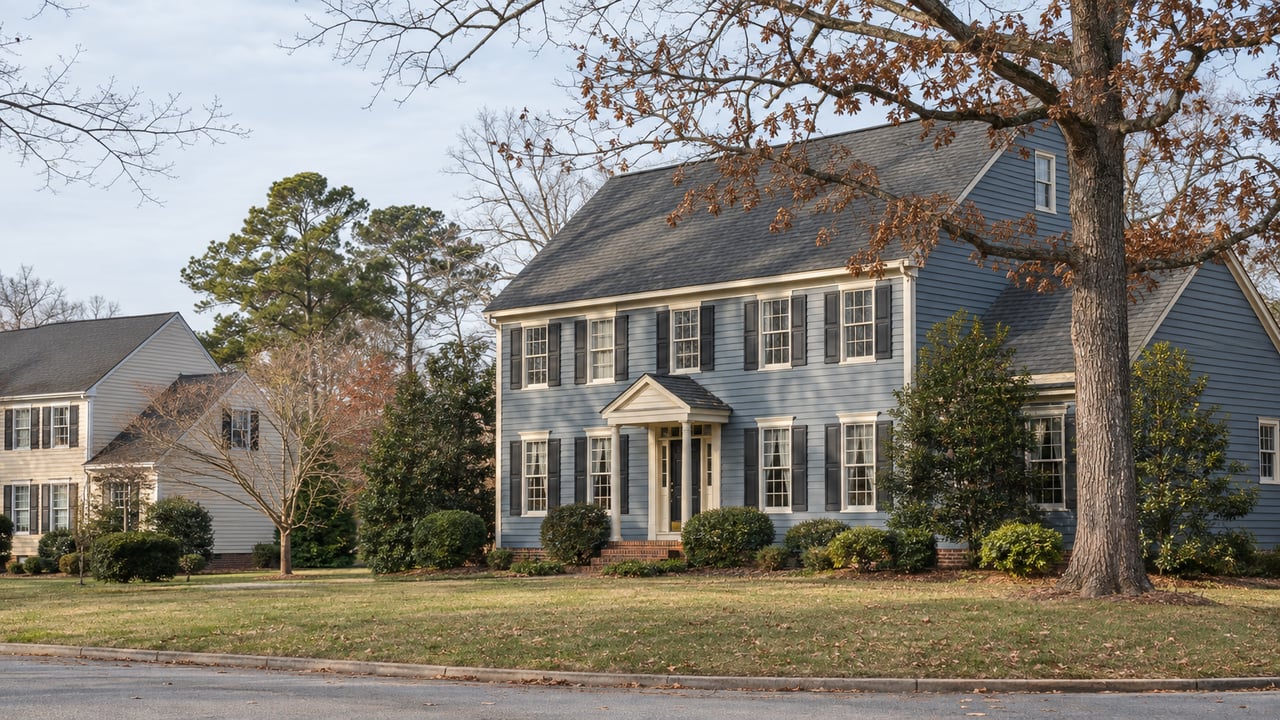
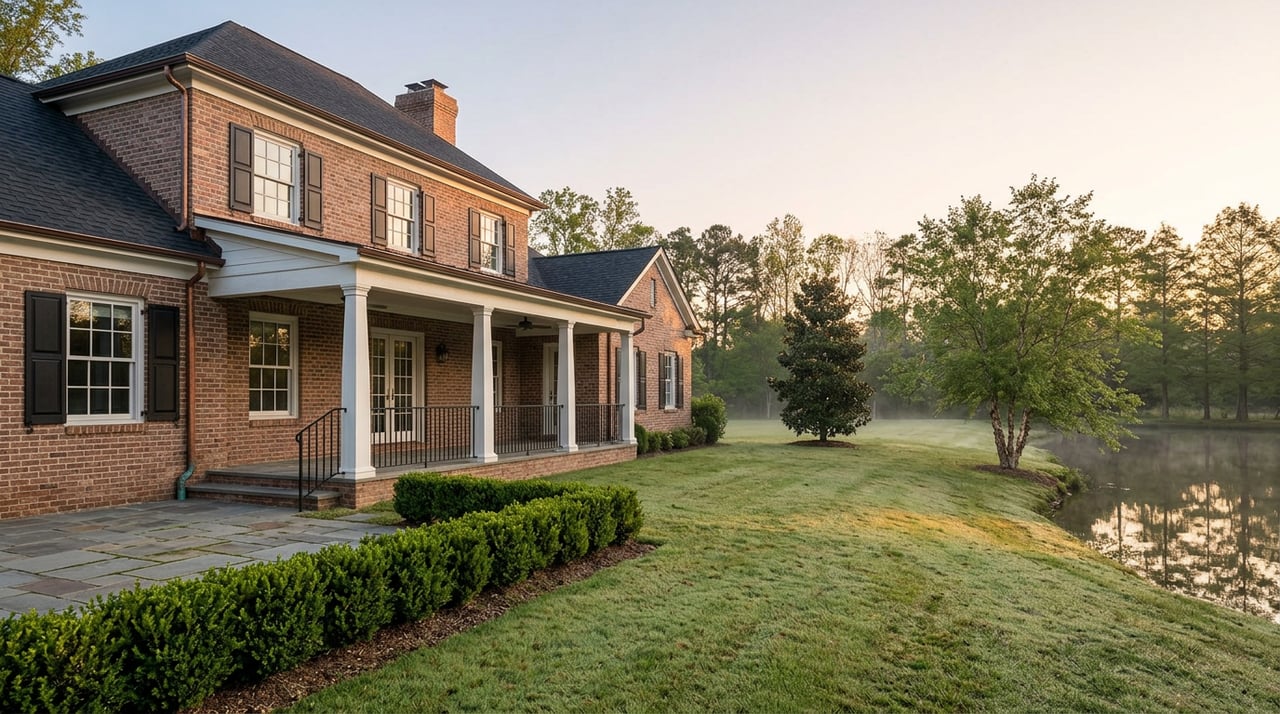
The original ranch and Colonial-style homes, the ones closest to what got built when the neighborhood started, sell in a $330,000 to $620,000 range. A separate pocket of newer and larger houses, some backing to the neighborhood's small lakes, sells from $630,000 up to $800,000. A third product, condos and townhomes clustered in developments just off Route 199, sits apart from both of those price bands entirely, attached and lower-maintenance by design. Three distinct products, three distinct buyers, one median.
| Segment | Typical price range | Character |
|---|---|---|
| Ranch and Colonial (original build era) | $330,000 - $620,000 | Midcentury, mature trees, low density |
| Newer/larger, some lake-adjacent | $630,000 - $800,000 | Later-phase construction |
| Condos and townhomes off Route 199 | Priced apart from both bands above | Attached, lower-maintenance |
The Homes.com local guide also describes the neighborhood as appealing to buyers who are upsizing or downsizing. That range of needs is reflected in its varied housing options.
A 2,200-square-foot home built in 1965 on Druid Drive recently changed hands, with the buyer represented by a fellow Liz Moore and Associates agent, Karen McKenzie. That's the original-era product still trading in its own lane. It has almost nothing in common, price-wise, with a newer lake-adjacent build two streets over, even though a portal search will happily show you both under the same neighborhood filter.
The math behind the headline number
Here's the mechanism worth understanding before you anchor a decision to any single median. When a small, mixed-vintage neighborhood reports a median sale price, that number is only as stable as whatever happened to sell during the window being measured. If eight of the last twelve closings were original ranches priced in the $330,000 to $620,000 band, and then a run of newer builds near $700,000 to $800,000 closes toward the end of that window, the twelve-month median can lurch upward by tens of thousands of dollars without a single existing owner's home actually gaining that kind of value. Nobody's equity moved. The mix of what sold moved.
You don't have to take that on faith. The same pattern shows up at the citywide level, where the sample sizes are documented month by month. In January 2026, Williamsburg's citywide median sale price was reported up 34.9 percent year over year, on 12 homes sold. Three months earlier, October 2025 numbers showed a 41.3 percent jump, on 13 homes sold and a swing in average days on market from 28 days to 106. Those are enormous headline percentages riding on a dozen or so transactions, which is a small enough sample that a handful of unusual closings can bend the whole number.
Compare that against a repeat-sales index, which tracks the same homes over time instead of whatever happened to close that month. Zillow's home value index for Williamsburg, updated as of June 30, 2026, put the typical home value at $473,283, up 1.0 percent over the prior year. One measurement method says double-digit surge. The other, tracking actual properties instead of whatever traded, says roughly flat. Both are accurate. They're just answering different questions, and a neighborhood as small and as vintage-mixed as Druid Hills is exactly the kind of place where that gap shows up loudest.
Why the older stock doesn't turn over often
Part of what keeps the ranch and Colonial segment thin, and therefore volatile in the median, is that owners in that section tend to stay put. Toney points to proximity as a factor in the Homes.com local guide: "You're at Riverside in a matter of minutes. That's probably one reason we don't see as much turnover, because even with that older market being there, they love the convenience of being that close to a major hospital." Riverside Doctors' Hospital Williamsburg sits about five miles out, and for a lot of longtime owners in the original-build section, that's reason enough to stay rather than sell.
Fewer original-era homes trading in any given window means each one that does sell carries more weight in the median. A neighborhood with steady turnover across a large, uniform housing stock smooths out one unusual sale. A neighborhood like Druid Hills, where the original ranches turn over slowly and the newer sections turn over on their own separate schedule, doesn't get that smoothing effect.
What this means if you're pricing a home or setting a budget
If you own one of the original ranches and you're getting ready to list, the neighborhood-wide median is close to useless as a pricing anchor. Your real comps sit inside the $330,000 to $620,000 band, ideally other original-build homes with similar square footage and updates, not the lake-adjacent newer builds pulling the overall number upward.
If you're a buyer with a set budget, the same logic runs the other direction. A number like $449,900 tells you almost nothing about what you'll actually be shown once you start touring, because it reflects sales across three different products. Knowing which band your budget lands in before you start looking saves a lot of wasted showings.
A few questions worth asking before you compare any Druid Hills listing to "the neighborhood median":
- What year was this specific home built, and which section of the neighborhood is it in?
- Is the comp your agent is using an original ranch, a newer lake-adjacent build, or a condo or townhome off Route 199?
- How many truly comparable sales (same era, similar size) support the number you're being quoted?
It helps to see where Druid Hills' entry point sits relative to the rest of the market. The original ranch and Colonial band starts at $330,000, well under Williamsburg's citywide typical home value of $473,283 as of mid-2026. That's a real, current entry point into a neighborhood with mature trees and low density, for buyers willing to shop the older section rather than the lake-adjacent one.
FAQ
Does a 36 percent jump in Druid Hills' median price mean my house is worth 36 percent more than it was a year ago? Not necessarily, and probably not at all if your home sits in the original ranch and Colonial section. That median reflects whatever mix of homes happened to sell across the neighborhood's several distinct price bands over the past year. A repeat-sales measure for the broader Williamsburg market, which tracks the same properties over time, showed roughly 1 percent growth over a comparable period.
How should I compare homes across Druid Hills' different sections? Stay inside the band. Compare original ranches to other original ranches, newer lake-adjacent builds to other newer builds, and condos or townhomes to others in that same product type. Mixing bands to justify a price is where buyers and sellers both get burned.
Is Druid Hills a good starting point for a first home in this price range? The original-era section, priced from $330,000, sits below the citywide typical home value, which makes it a reasonable entry point for a buyer prioritizing an established, low-density setting over a newer build.
Numbers like these are exactly why it helps to work with someone who reads a neighborhood section by section instead of by its headline average. If you're weighing a home in Druid Hills, or trying to figure out which price band actually fits your search, Tabitha Dalton can walk through the comps that matter for your specific situation. Let's Connect.